Subsidiary Company Registration Online in India
Open a part of your foreign business in India as a separate entity to operate under local laws but still be connected to your main company.
- No Hidden Charges
- Lowest Price Guarantee
No Hidden Charges
Lowest Price Guarantee
Posted onTrustindex verifies that the original source of the review is Google. Audit Tick streamlined our company registration seamlessly. Their team was efficient, knowledgeable, and extremely helpful throughout the process. Highly recommended for quick and reliable service!Posted onTrustindex verifies that the original source of the review is Google. Knowledgeable staff I never metPosted onTrustindex verifies that the original source of the review is Google. awesome audit work with audit tickPosted onTrustindex verifies that the original source of the review is Google. Good workPosted onTrustindex verifies that the original source of the review is Google. Working skills awesomePosted onTrustindex verifies that the original source of the review is Google. Work is goodPosted onTrustindex verifies that the original source of the review is Google. Nice experience with audit tick for It returns fillingPosted onTrustindex verifies that the original source of the review is Google. SuperrrrbPosted onTrustindex verifies that the original source of the review is Google. Excellent audit filling with audit tickPosted onTrustindex verifies that the original source of the review is Google. Iam fully satisfied with Audit tick, superrrrb
- Home
- Get Started
- Subsidiary of Foreign Company
Four Steps to Get Your Incorporation Certificate
Fill the Form
Provide business details
Add to cart
Pay the required fee online
Submit Documents
Upload required papers
Certificate delivery
Official Document Delivery
Find the best plan for your needs
Overview
A foreign company subsidiary in India is a company where a foreign business owns more than 50% of the shares. It allows global companies to expand into India while keeping control of operations.
Setting up and running a foreign subsidiary in India requires following several laws, including the Companies Act, 2013, Foreign Exchange Management Act (FEMA), 1999, and the Income Tax Act, 1961.
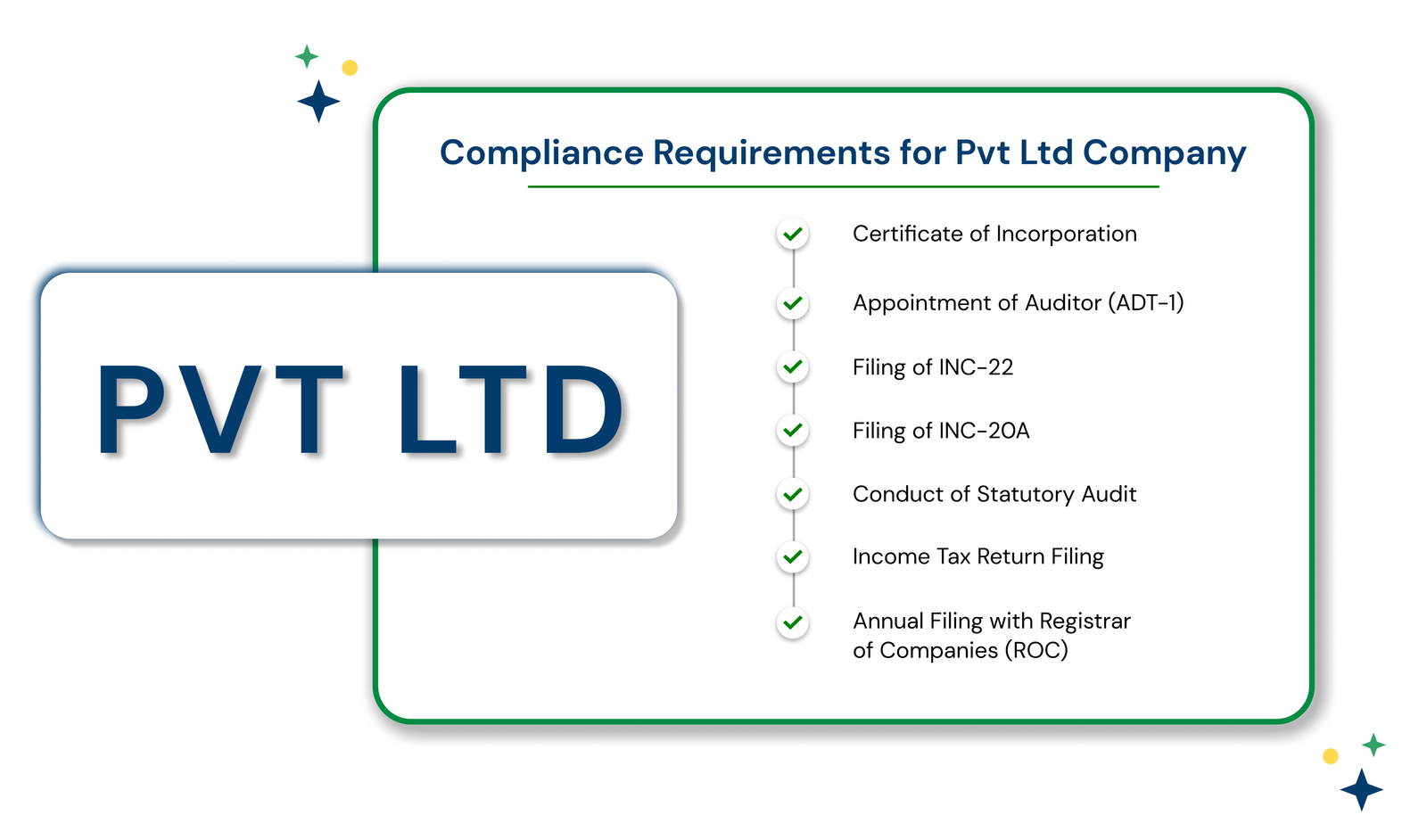
Legal Framework for a Foreign Subsidiary in India
A foreign subsidiary must follow multiple Indian laws to ensure smooth business operations. The key laws include
Process to Set Up a Foreign Subsidiary in India
Need to update

- Private Limited Company (Most common)
- Public Limited Company
- Limited Liability Partnership (LLP) (Limited FDI options)
- Reserve a name using MCA’s RUN (Reserve Unique Name) facility.
- File the SPICe+ Form to get registered.
- Obtain a Certificate of Incorporation (COI) from the ROC.
At least two directors, one must be an Indian resident (Section 149(3), Companies Act).
- Appoint a local Authorized Representative for compliance purposes.
- The parent company must send funds via FEMA-approved banking channels.
- Report FDI transactions to RBI within 30 days using Form FC-GPR.
- Permanent Account Number (PAN) & Tax Deduction Account Number (TAN).
- GST Registration (if turnover exceeds ₹40 lakh, or ₹10 lakh for special states).
- Industry-specific approvals, if required.
Required for managing finances and profit repatriation.
- Annual financial reports to ROC.
- FDI filings to RBI under FEMA.
- Income tax filings under the Income Tax Act.
Note: Need to Update
Annual Compliance Requirements for a Foreign Subsidiary
To operate legally, a foreign subsidiary in India must comply with the following
Need to Update
Advantages of Setting Up a Foreign Subsidiary in India
Need to Update
100% Foreign Ownership
No local partner required in most sectors.
Limited Liability
The parent company is protected from subsidiary debts.
Access to Indian Market
Take advantage of India’s growing economy.
Easy Fund Repatriation
Profits can be sent back to the parent company under FEMA rules.
Need to Update
Taxation of Foreign Subsidiaries in India
Corporate Tax
Normal corporate tax rate: 25% or 30% based on turnover.
MAT (Minimum Alternate Tax): 15% of book profits if normal tax is lower.
Dividend Tax
20% withholding tax (Section 115-O).
Lower rates if applicable under DTAA.
Transfer Pricing (Sections 92-92F)
Transactions between parent and subsidiary must be reported to avoid tax evasion.
Types of Foreign Subsidiaries in India
Foreign companies can set up different types of subsidiaries in India
Frequently Asked Questions
What is a subsidiary of a foreign company?
A subsidiary is a company whose controlling interest is held by another company, typically referred to as the parent company. A foreign subsidiary in India is majority-owned by a foreign corporation.
How does a subsidiary differ from a branch office?
A subsidiary operates as a separate legal entity from the parent company, unlike a branch office which is merely an extension of the parent company. This means a subsidiary has greater flexibility in its operations and limits the liability to the investments in the subsidiary, not affecting the parent company directly.
What are the advantages of setting up a subsidiary in India?
Advantages include limited liability, local brand recognition, eligibility for local benefits and incentives, ability to conduct all types of business activities, and easier access to local markets.
What are the legal requirements to establish a subsidiary in India?
The subsidiary must be registered as an Indian company with the Ministry of Corporate Affairs (MCA). This involves incorporation under the Companies Act, obtaining a Company Identification Number (CIN), and complying with local regulatory requirements.
What is the minimum investment required for a foreign company to set up a subsidiary in India?
There is no minimum capital requirement to establish a subsidiary in India, but the investment should be sufficient to cover operational needs and comply with any specific sectoral investment limits.
Can a subsidiary repatriate profits to its foreign parent?
Yes, after paying applicable taxes in India, a subsidiary can repatriate dividends to its foreign parent without further taxation in India.
What are the tax implications for a subsidiary in India?
A subsidiary in India is taxed as a domestic company. This includes corporate tax on its income, dividend distribution tax (if applicable), and other relevant taxes based on its operations.
How long does it take to set up a subsidiary in India?
Setting up a subsidiary in India can take anywhere from a few weeks to several months, depending on the complexity of the business, the sector, and the completeness and accuracy of the documentation provided during registration.
What sectors are popular for foreign subsidiaries in India?
Popular sectors include technology, pharmaceuticals, manufacturing, services, and consumer products. Each sector might have different regulatory frameworks and investment caps.
What happens if a foreign parent company wants to close its subsidiary in India?
Closing a subsidiary involves a process called winding up, which can be voluntary or compulsory. The process includes settling debts, liquidating assets, and obtaining necessary approvals from the Ministry of Corporate Affairs and other regulatory bodies.