Convert Sole Proprietorship to Private Limited Company
Need to Update
- No Hidden Charges
- Lowest Price Guarantee
No Hidden Charges
Lowest Price Guarantee
Posted onTrustindex verifies that the original source of the review is Google. Audit Tick streamlined our company registration seamlessly. Their team was efficient, knowledgeable, and extremely helpful throughout the process. Highly recommended for quick and reliable service!Posted onTrustindex verifies that the original source of the review is Google. Knowledgeable staff I never metPosted onTrustindex verifies that the original source of the review is Google. awesome audit work with audit tickPosted onTrustindex verifies that the original source of the review is Google. Good workPosted onTrustindex verifies that the original source of the review is Google. Working skills awesomePosted onTrustindex verifies that the original source of the review is Google. Work is goodPosted onTrustindex verifies that the original source of the review is Google. Nice experience with audit tick for It returns fillingPosted onTrustindex verifies that the original source of the review is Google. SuperrrrbPosted onTrustindex verifies that the original source of the review is Google. Excellent audit filling with audit tickPosted onTrustindex verifies that the original source of the review is Google. Iam fully satisfied with Audit tick, superrrrb
- Home
- Compliance & Accounting
- Convert Proprietorship to Pvt Ltd
Four Steps to Get Your Incorporation Certificate
Fill the Form
Provide business details
Add to cart
Pay the required fee online
Submit Documents
Upload required papers
Certificate delivery
Official Document Delivery
Find the best plan for your needs
Overview
A Sole Proprietorship may be ideal for small-scale businesses, but it has limitations in terms of liability, fundraising, and business continuity. Converting it into a Private Limited Company provides legal security, enables business expansion, and builds investor trust. This process is governed by the Companies Act, 2013.
Typically takes 30 to 45 days, subject to regulatory approvals and documentation accuracy.
Benefits of a Private Limited Company?
Need to Update
Limited Liability Protection
Owners are not personally liable for business debts.
Separate Legal Identity
The company exists independently from its owners.
Better Fundraising Opportunities
Eligible for equity investment, venture capital, and bank loans.
Increased Credibility
Recognized by banks, investors, and customers as a more stable business entity.
Perpetual Existence
The company continues even if ownership changes.
Tax Benefits
Eligible for corporate tax structures and deductions.
Eligibility Criteria for Conversion
To convert a Sole Proprietorship into a Private Limited Company, the business must meet the following requirements

Minimum of 2 Shareholders (including the Proprietor)

At Least 2 Directors (One must be an Indian Resident)

Approval of Unique Company Name from ROC

DIN & DSC for Directors
Registered Office Address in India
Business Transfer Agreement to Transfer Assets & Liabilities
Documents Required for Conversion
Need to Update
PAN Card & Aadhaar Card of the Proprietor
Memorandum & Articles of Association (MoA & AoA)
Digital Signature Certificate (DSC) & Director Identification Number (DIN)
Latest Bank Statements & Utility Bill for Address Verification
Address Proof of Directors & Registered Office
No Objection Certificate (NOC) from Proprietor for Conversion
Business Transfer Agreement (for asset transfer from Proprietorship to Company)
Process for Conversion
Need to Update

- Apply Digital Signature Certificates (DSC) for proprietor and other proposed directors to enable online document submission.
- Obtain Director Identification Number (DIN) via Form DIR-3 from the Ministry of Corporate Affairs (MCA)
- Choose a unique company name and apply for approval through RUN (Reserve Unique Name) form on the MCA portal.
- The name must comply with the Companies Act, 2013 and should not conflict with existing trademarks or businesses.
- Memorandum of Association (MoA) defines the company’s business objectives.
- Articles of Association (AoA) outline the internal regulations governing the company.
- The company must include a clause mentioning that it is formed as a result of the conversion of a Sole Proprietorship.
- Submit the SPICe+ (INC-32) form, which includes:
✅ MoA (INC-33) & AoA (INC-34)
✅ Declaration by Directors (INC-9 & DIR-2)
✅ Registered Office Address Proof (Utility Bill, Lease Agreement, or NOC from Owner)
✅ Application for PAN & TAN (Now part of the incorporation process)
✅ AGILE-PRO Form for Bank Account & GST Registration (if applicable)
- The Registrar of Companies (ROC) verifies the documents.
- Upon approval, the ROC issues the Certificate of Incorporation, along with the CIN (Corporate Identification Number), PAN, and TAN.
- Execute a Business Transfer Agreement to transfer ownership, licenses, and liabilities to the new company.
- Update GST, bank accounts, trademarks, and other business registrations under the new company name.
- Open a current bank account in the new company’s name.
- Complete statutory filings with MCA and comply with SEBI, GST, and Income Tax regulations.
Note: Need to update
Frequently Asked Questions
What is a Private Limited Company?
A Private Limited Company is a legally recognized business structure that limits owner liability to their shares, restricts the number of shareholders to 200, and restricts public trading of shares.
Why convert a sole proprietorship to a Private Limited Company?
Converting can offer benefits such as limited liability, increased credibility, easier access to capital, ability to bring on multiple investors or partners, and an enhanced professional image.
What are the key steps in converting a proprietorship to a Pvt Ltd?
The conversion involves incorporating a new Private Limited Company, transferring assets and liabilities from the proprietorship to the company, and winding up the proprietorship.
What documents are needed for the conversion?
Required documents typically include identity proof and address proof of the directors and shareholders, a registered office address proof, Memorandum of Association (MoA), and Articles of Association (AoA).
How long does the conversion process take?
The entire process can take anywhere from a few weeks to a couple of months, depending on the complexity of the business and the speed of statutory approvals.
What happens to the assets and liabilities of the proprietorship?
Assets and liabilities of the proprietorship can be transferred to the new Private Limited Company. This transfer should be carefully planned and executed to ensure proper valuation and documentation.
Are there any tax implications during the conversion?
Yes, transferring assets might trigger capital gains tax, and different tax liabilities may arise as the tax structure changes from a sole proprietorship to a Private Limited Company.
Can the new Pvt Ltd use the same business name as the proprietorship?
Yes, if the name is available and approved by the Registrar of Companies during the incorporation process.
What are the compliance requirements for a Pvt Ltd compared to a proprietorship?
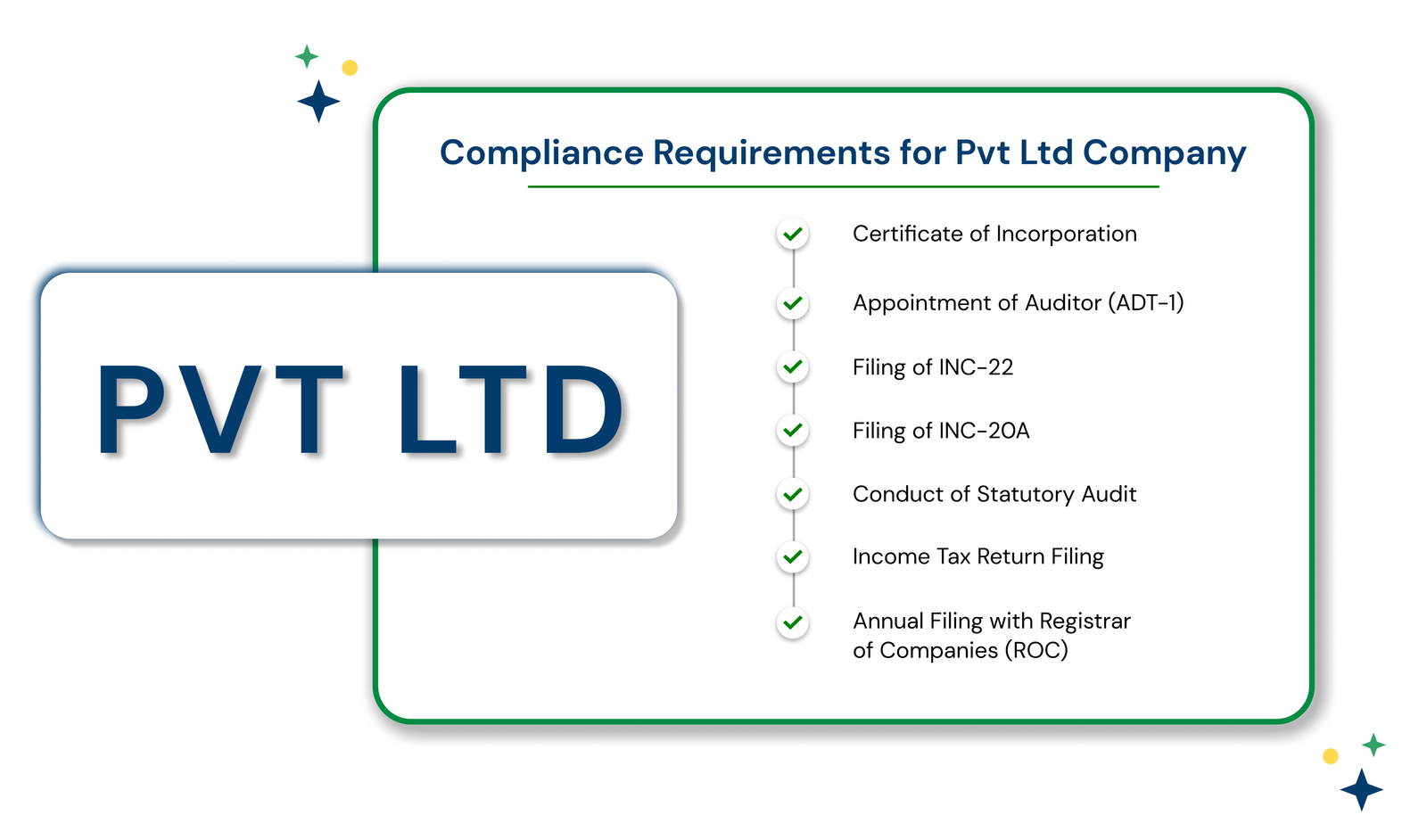
A Private Limited Company faces more rigorous compliance requirements, including mandatory annual audits, more frequent filings with the Registrar of Companies, and compliance with the Companies Act.
What should be considered before converting a proprietorship to a Pvt Ltd?
Consider the increased compliance and operational costs, the need for more structured corporate governance, potential tax implications, and evaluate whether the benefits of conversion align with your business goals.